Algonics Start a project

Power conversion from 100 W to 30 kW and beyond

Inverters, bidirectional converters, chargers, motor drives and online UPS. Every design runs our own DSP control firmware, around magnetics we design and wind in the lab. We deliver the design; your factory builds it.

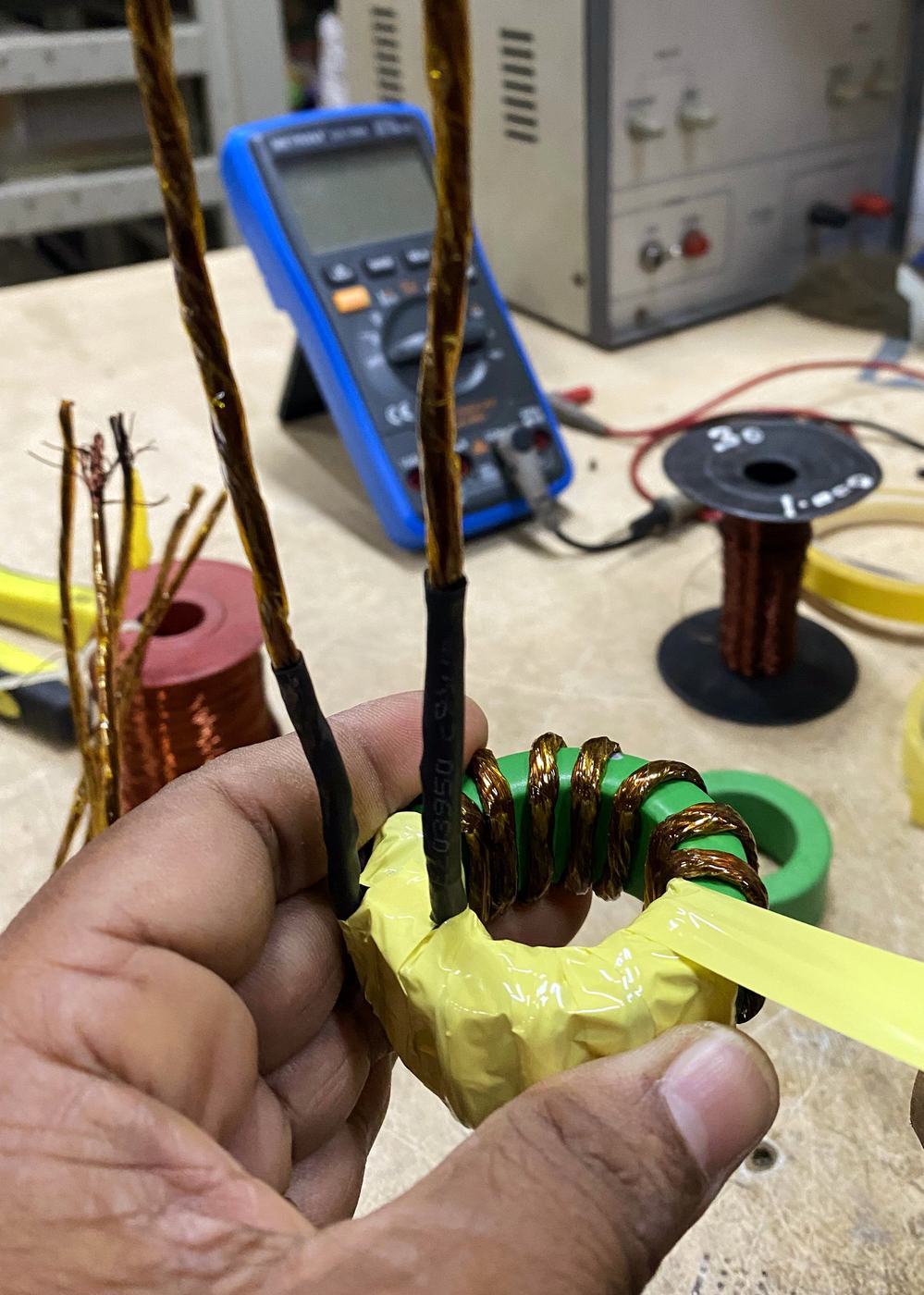
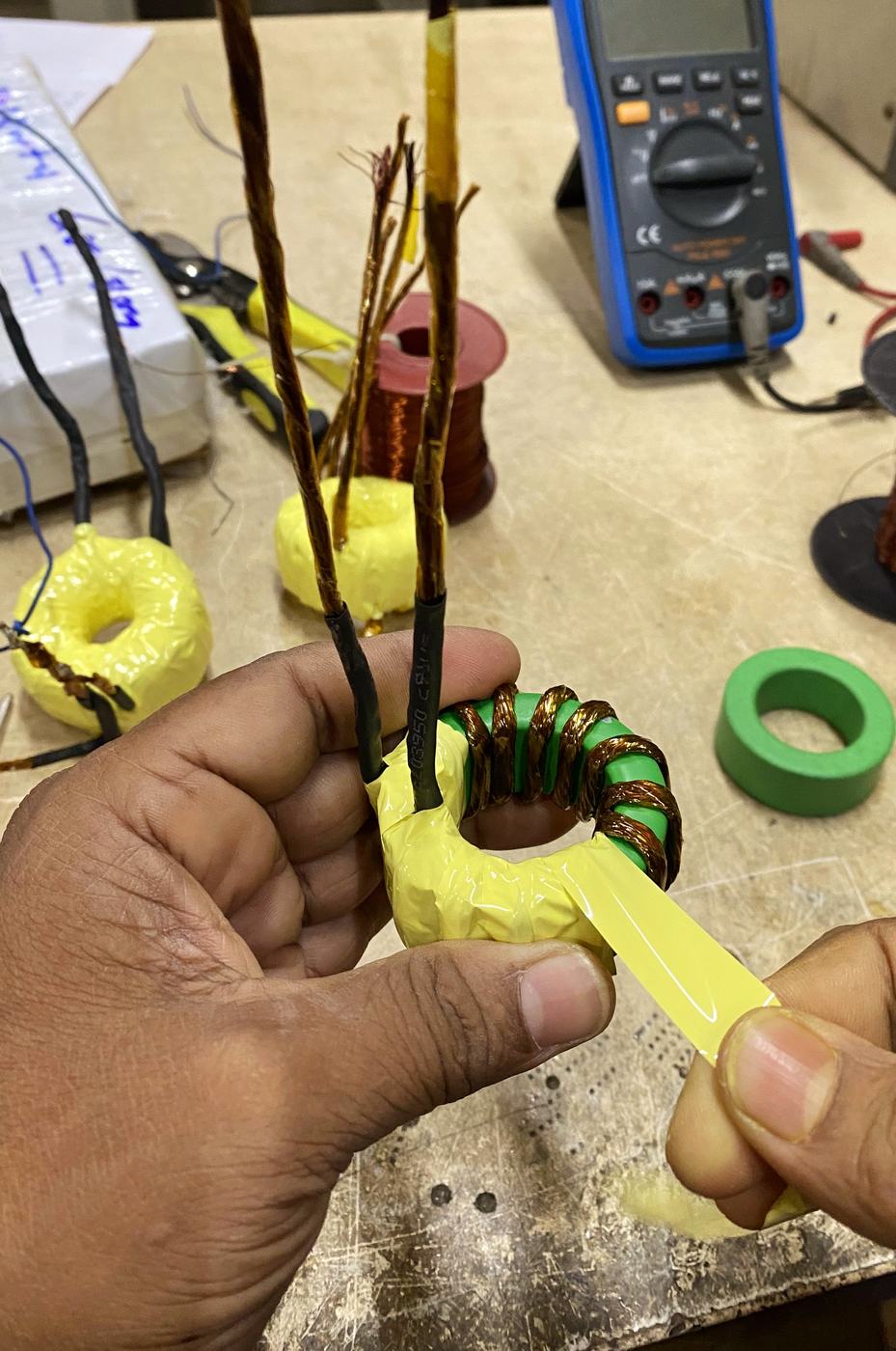
Hand holding a green toroidal core freshly wound with copper wire and yellow insulating tape, multimeter behind
A prototype toroidal choke, hand-wound and taped before it goes into the power stage.
  • DSP controlMicrochip digital signal controllers, our own firmware
  • 1φ and 3φGrid-tied, off-grid and bidirectional topologies
  • IGBT and MOSFETGate drives, snubbers, DC link and thermal design
  • ConnectedBluetooth, GPRS, AWS IoT and web dashboards

What we build

Seven families of converter, each with a control approach we have already proven in delivered hardware.

Grid-tied and hybrid inverters

Active and reactive power control, grid synchronisation with an extended digital PLL, resonant current control for low THD, frequency-shift anti-islanding, MPPT solar charging, programmable export limits down to zero, parallel operation. Residential, commercial and industrial ratings.

Su-vastika Systems. 1φ and 3φ hybrid inverters on Microchip DSP with zero-changeover UPS function and a Bluetooth phone app.

Bidirectional and regenerative converters

IGBT active front end synchronised to the three-phase grid, four-quadrant operation, near-unity power factor, energy returned to the mains instead of burned in resistors. Regenerative DC supplies with IoT remote monitoring and SCADA integration.

Neo Tele-Tronix. 11 kW, 220 V DC. IIEST Shibpur. 220 V, 40 A DC source and sink.

Motor drives

Two-level space vector modulation for induction machines, constant V/f with soft start, motor speed tracking the solar array’s maximum power point.

BHAVINI, PFBR Kalpakkam. SVM variable-frequency drive. Agricultural university. 5 HP solar pump drive.

Chargers, DC-DC and railway inverters

Float-cum-boost charging of 110 V signalling batteries with temperature compensation, N+1 load sharing across hot-swappable modules, 110 V DC to 230 V AC inverters with ±1% frequency accuracy and auto-reset short-circuit protection. Lead-acid and lithium charging algorithms.

Railway IPS. FRBC 110 V, 20 A chargers, 500 VA to 1.5 kVA inverters and DC-DC banks, tested before RDSO officials. Railway systems

Online UPS

Double conversion: PFC rectifier, regulated DC bus, sine-wave inverter, battery charger and bypass, all under microcontroller control with an LCD HMI. Power factor above 0.99, THD below 8%, with remote monitoring.

3 kVA true-online UPS designed and built to a customer specification. Platform and bench video

EV charging

Power stages for DC fast chargers, OCPP-compliant charger firmware, charging management system, billing, payment gateway, fleet management and cross-platform mobile apps.

Power stage, firmware and back-end software from one team. Charging software

Test sources and loads

Phase-controlled variable-frequency AC sources and programmable loads for automating electrical test equipment.

Neo Tele-Tronix. Dual AC sources, 47.5–52.5 Hz.

Projects in detail

Neo Tele-Tronix Pvt. Ltd.

11 kW regenerative AC-DC converter

  • 11 kWrating
  • 48 Aat 220 V DC
  • <3%ripple
  • ±2%stability

An IGBT-based bidirectional converter that supplies a regulated DC bus and returns surplus energy to the grid. For the same client we designed a pair of phase-controlled AC sources that sweep 47.5 to 52.5 Hz. The partnership has run for more than a decade.

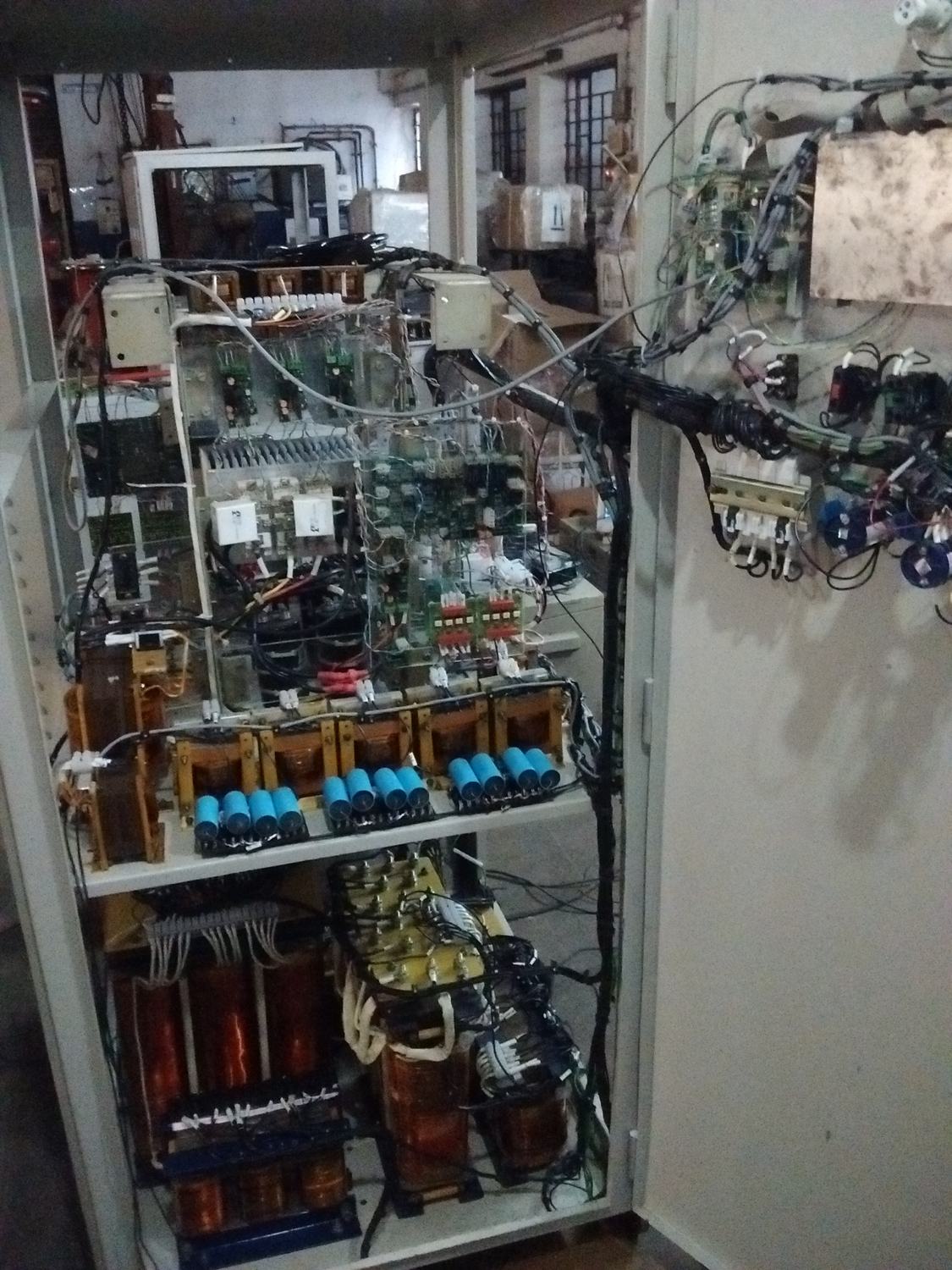
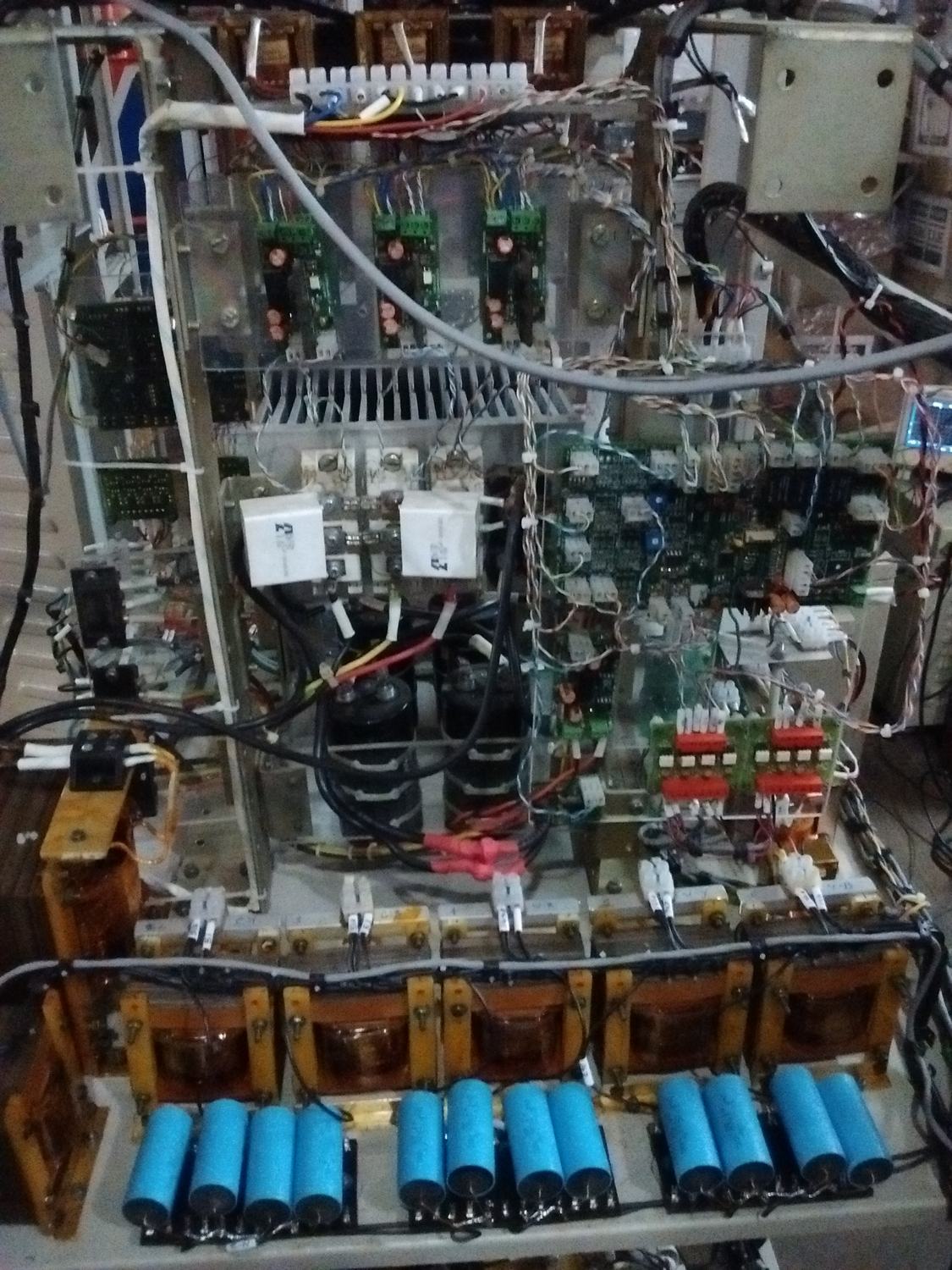
Open cabinet of a bidirectional inverter with control boards above and magnetics and capacitors below
Bidirectional converter delivered to Neo Tele-Tronix, cabinet open.

11 kW bidirectional regenerative converter

Output
220 V DC, 48 A
Power factor
>0.97
Input THD
<8%
Output ripple
<±3%
Output stability
±2%
Digital adjustment
±10% of set value
Construction
IGBT stage, DSP PWM, isolated feedback, DC-link capacitors, forced-air cooling
Interface
LCD HMI, short-circuit protected

Variable-frequency dual AC source

Rating
1500 VA, three-phase
Output voltage
300–450 V AC (415 V nominal)
Frequency
47.5–52.5 Hz
Phase control
Primary to secondary, 0–120°
Balance
Balanced voltage and phase
Interface
LCD HMI, short-circuit protected
Companion stacks
440 W / 50 V and 220 W / 25 V DC converters (8.8 A)

Su-vastika Systems, Gurugram

Grid-synchronised hybrid inverters

  • 1φ & 3φtopologies
  • <1 santi-islanding trip

Single- and three-phase hybrid inverters on Microchip DSP. Our extended digital PLL holds lock on a distorted grid; resonant controllers keep current THD low; frequency-shift anti-islanding disconnects in under a second when the grid goes away. Units share load in parallel gangs, switch to battery with zero changeover as a UPS, and report to a Bluetooth phone app.

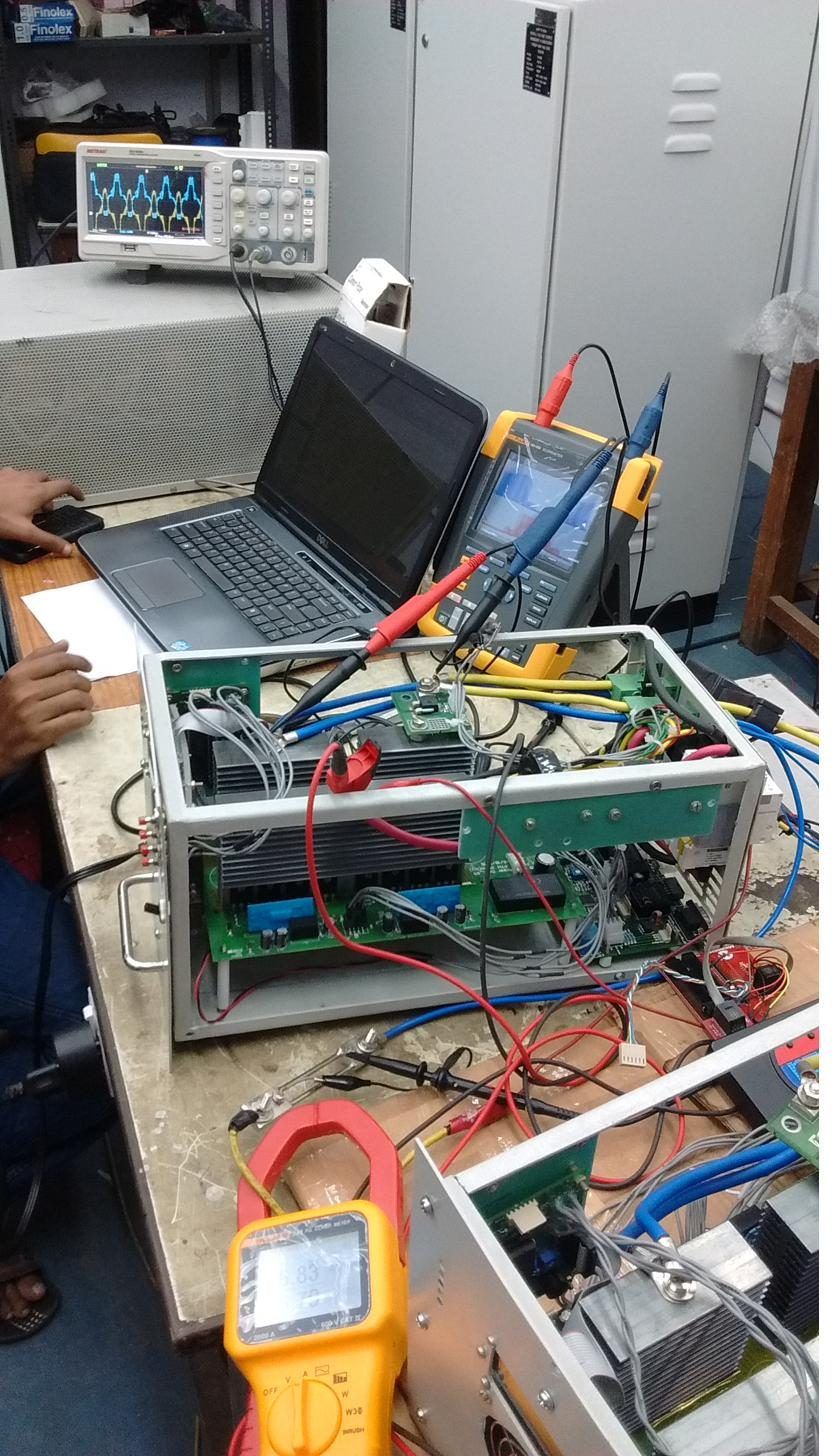
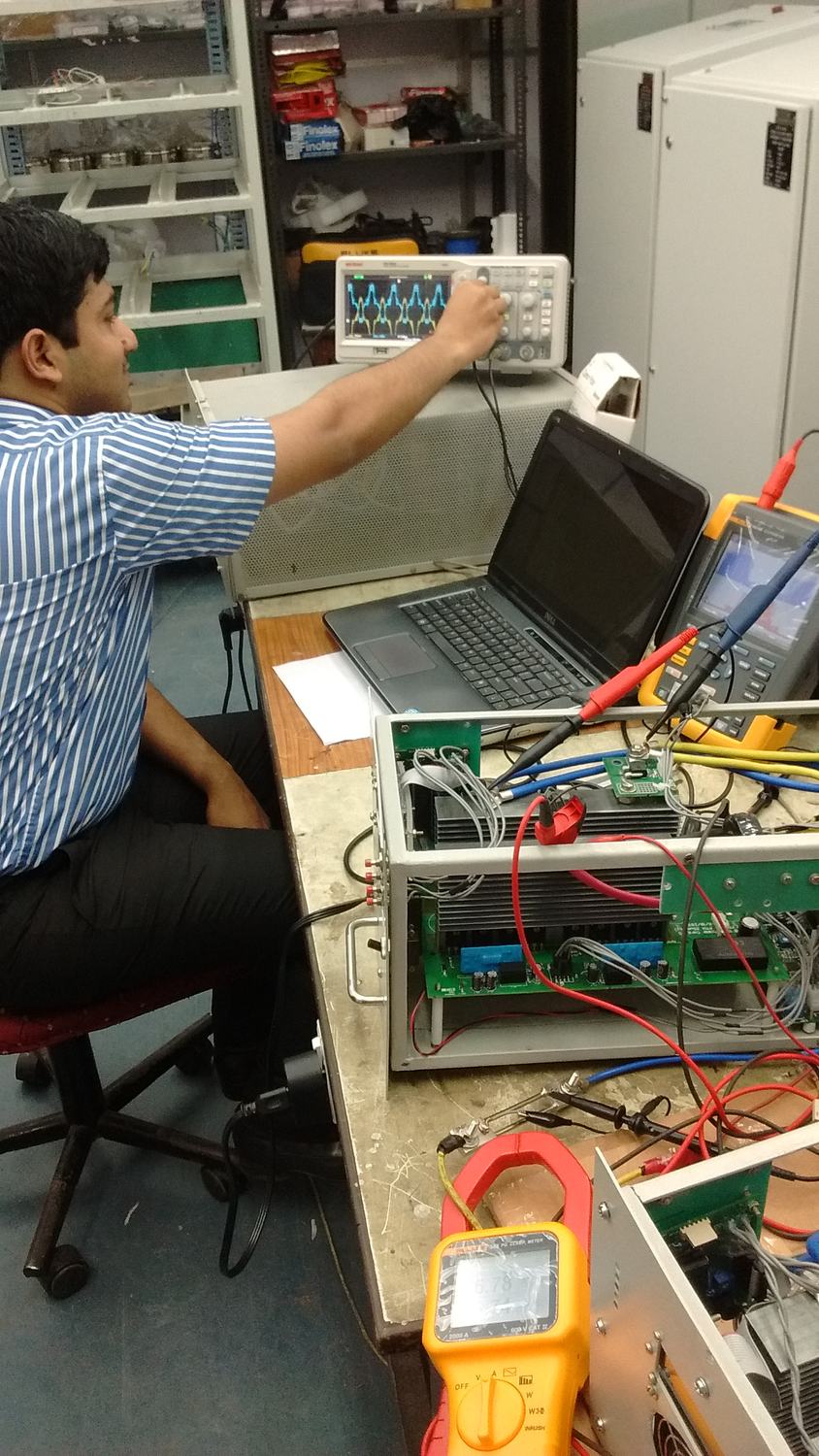
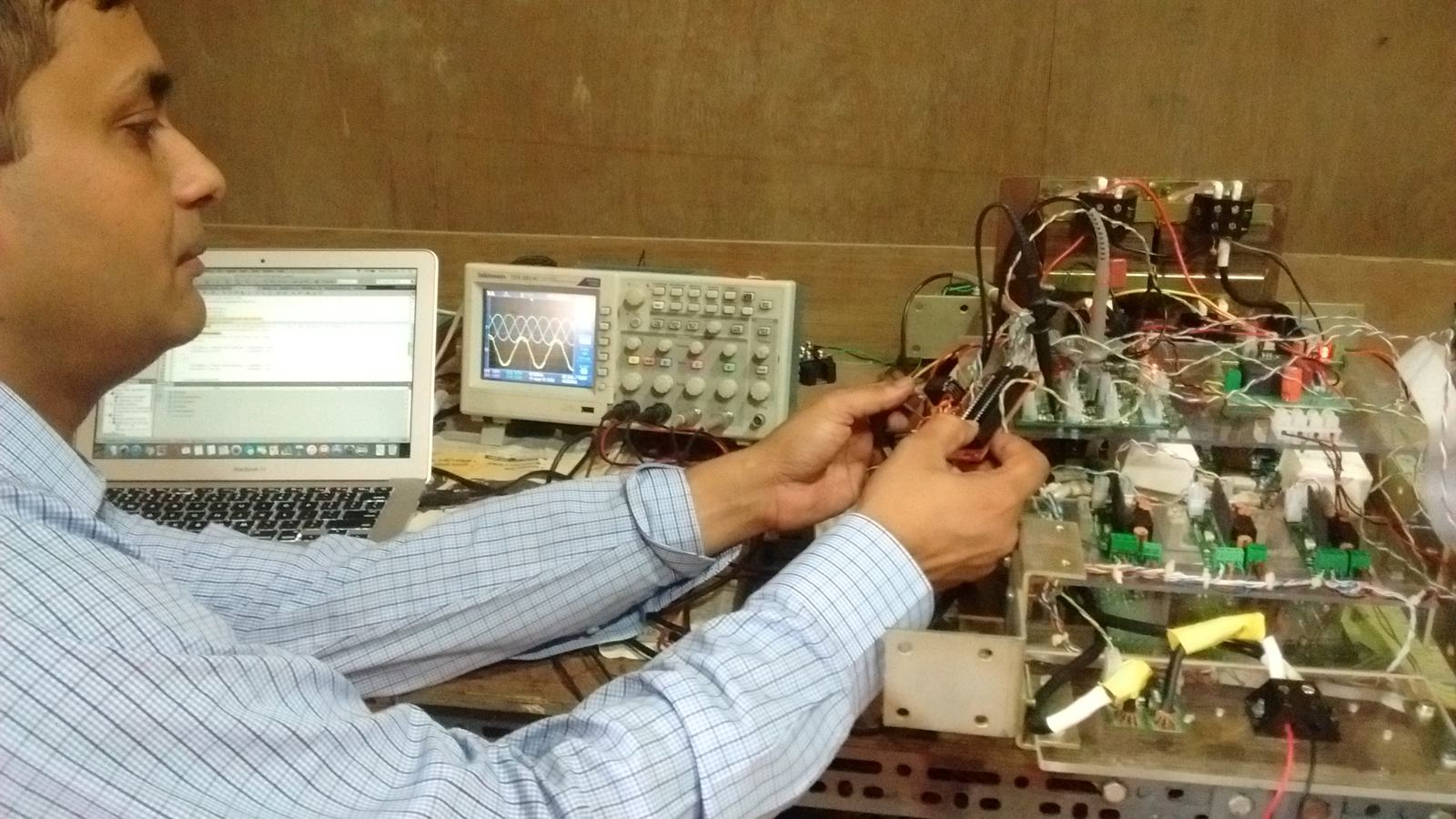
Inverter power stage with heat-sinked switches, gate-driver and control boards, wired to a Fluke ScopeMeter and laptop
Inverter power stage under instrumented test: control and gate-driver boards wired to a ScopeMeter while the loops are tuned.

IIEST Shibpur

Grid-tied DC source and sink

Two 220 V, 40 A bidirectional DC converters for the electrical machines laboratory at one of India’s oldest engineering institutes. Students test DC machines in all four quadrants: in motoring the unit is a programmable supply; in generating it converts the machine’s energy to three-phase power and exports it, near unity power factor throughout.

BHAVINI, Dept. of Atomic Energy

Space-vector modulated drive

A two-level SVM variable-frequency drive for asynchronous induction machines at the Prototype Fast Breeder Reactor, Kalpakkam, delivered with simulation and on-site training. The work led to approved-vendor status for power electronics, UPS, drives, automation, HMI and embedded systems.

Agricultural university

Solar pump drive

A V/f drive for a 5 HP three-phase submersible pump, run straight from a solar array. Motor speed rises and falls to keep the array at its maximum power point as irradiance changes, and a soft start limits inrush and mechanical stress.

Hybrid power, in general

The hard parts we design for

Pumps, air conditioners and refrigeration need several times their running kVA to start, so the stage is sized for it. Distributed generation must ride through passing cloud without upsetting the grid. Battery chemistry keeps changing, so charging profiles live in firmware where they can be updated.

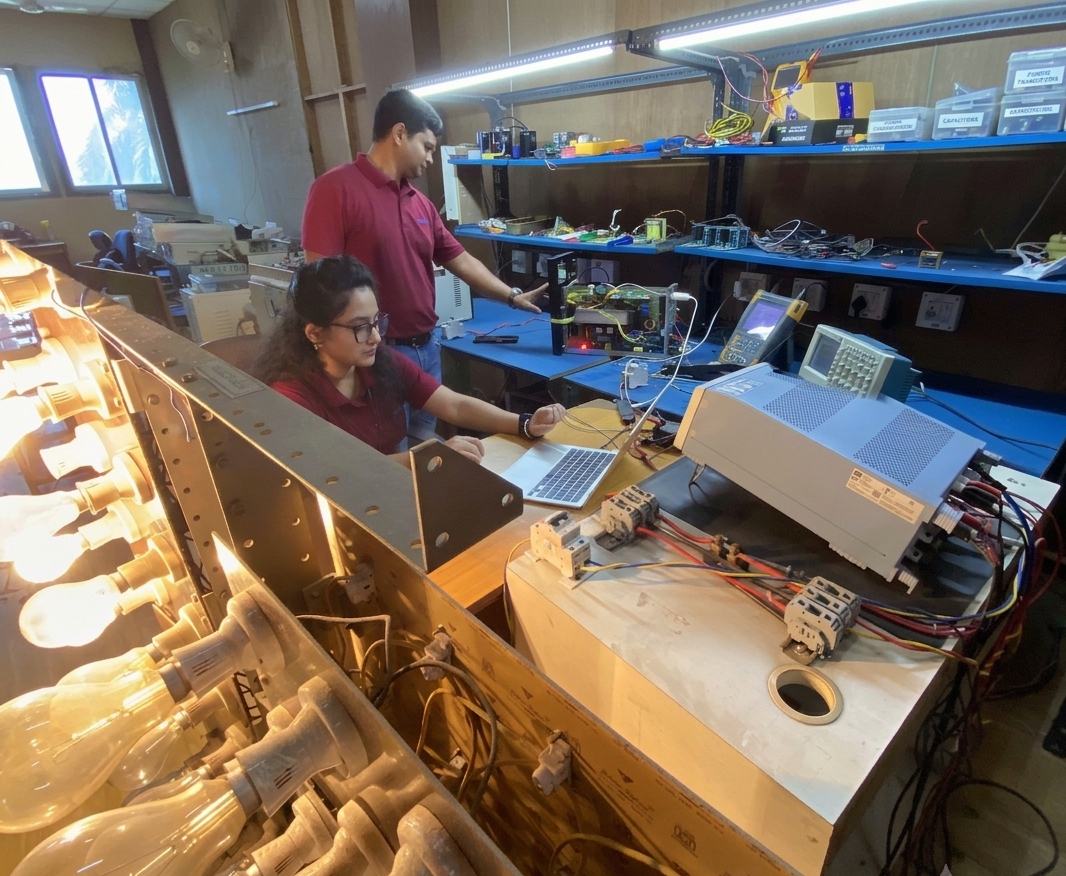
On the bench: the UPS running under instrumented test into a lamp load at our Kolkata lab. 25 seconds.

3 kVA true-online UPS

Designed and built to a customer specification: rectifier, DC bus, inverter, battery charger, bypass and microcontroller control, with an LCD HMI carrying full diagnostics.

In double conversion the load always runs from the inverter, so a mains failure means zero transfer time and the output stays a regulated sine wave whatever the input quality. Verification happens on working hardware, at power, before anything is called finished.

  • 3 kVArated capacity
  • ZeroAC-to-battery transfer
  • Pure sinebattery-mode output
  • ≤3%THD, linear load
Rectifier and PFC
High-frequency switch-mode rectification with power-factor correction, holding a regulated DC bus from a wide, distorted mains input.
DC bus and charger
Managed DC link with an integrated charger: controlled charge current, battery over- and under-voltage shutdown, deep-discharge protection.
PWM inverter
IGBT inverter under closed-loop PWM, with pulse widths corrected cycle by cycle against a sine reference.
Bypass and transfer
Voltage-tracking bypass that matches the inverter to the line before any transfer, so changeover causes no surge.
Protection
Graded overload handling, cycle-by-cycle IGBT current limiting, short-circuit protection, thermal and fan supervision.
LCD HMI
Live parameters, fault codes and event indication, the same HMI discipline as our IPS and converter families.

Connected, not a silent box

  • Isolated sensing of every critical rail: battery, bus and output
  • SNMP and Modbus network monitoring, and web dashboards for multi-unit supervision
  • Scheduled battery tests, automated shutdown logic and event logging
  • SMS and email alerting from field systems, as proven at Paharpur

Magnetics designed and wound here

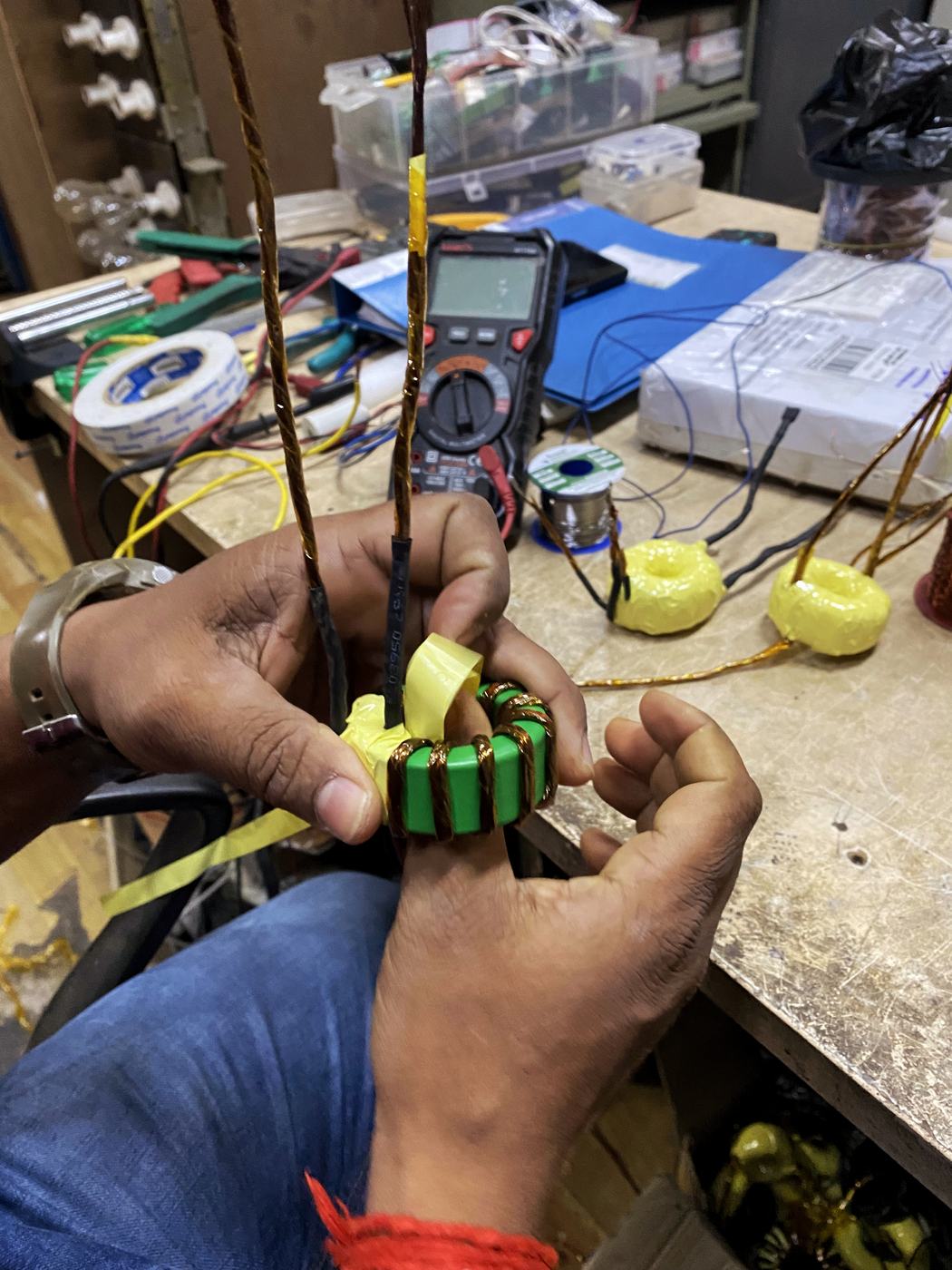
Catalogue inductors rarely suit a new topology, and magnetics decide a converter’s size, losses and noise. We size the core, wire gauge and turns in simulation, then wind the first parts by hand.

Each choke and transformer is insulated layer by layer and measured before it goes into the power stage. Once it is right, the winding specification goes into your design pack so your magnetics supplier can make it in volume.

Control firmware we already own

More than fifteen years of converter firmware means most of your control loop exists before the project starts. We have been a Microchip Authorized Design Partner since 2013.

Signal processing and control

  • PID
  • FFT
  • FIR and IIR filters
  • Space vector modulation
  • Extended digital PLL
  • Resonant controllers
  • MPPT
  • Anti-islanding
  • Lead-acid and lithium charging

Power stage

IGBT and MOSFET switching, gate drivers, snubbers, DC-link capacitors and thermal management, assembled into a complete power stack. SMPS auxiliary supplies, and isolated voltage and current feedback to the controller.

Connectivity

RTOS-based IoT modules, browser HMIs, Bluetooth phone apps, GPRS telemetry and cloud dashboards on AWS IoT, with full parameter logging. Web-enabled systems

Tested at rated power before it leaves

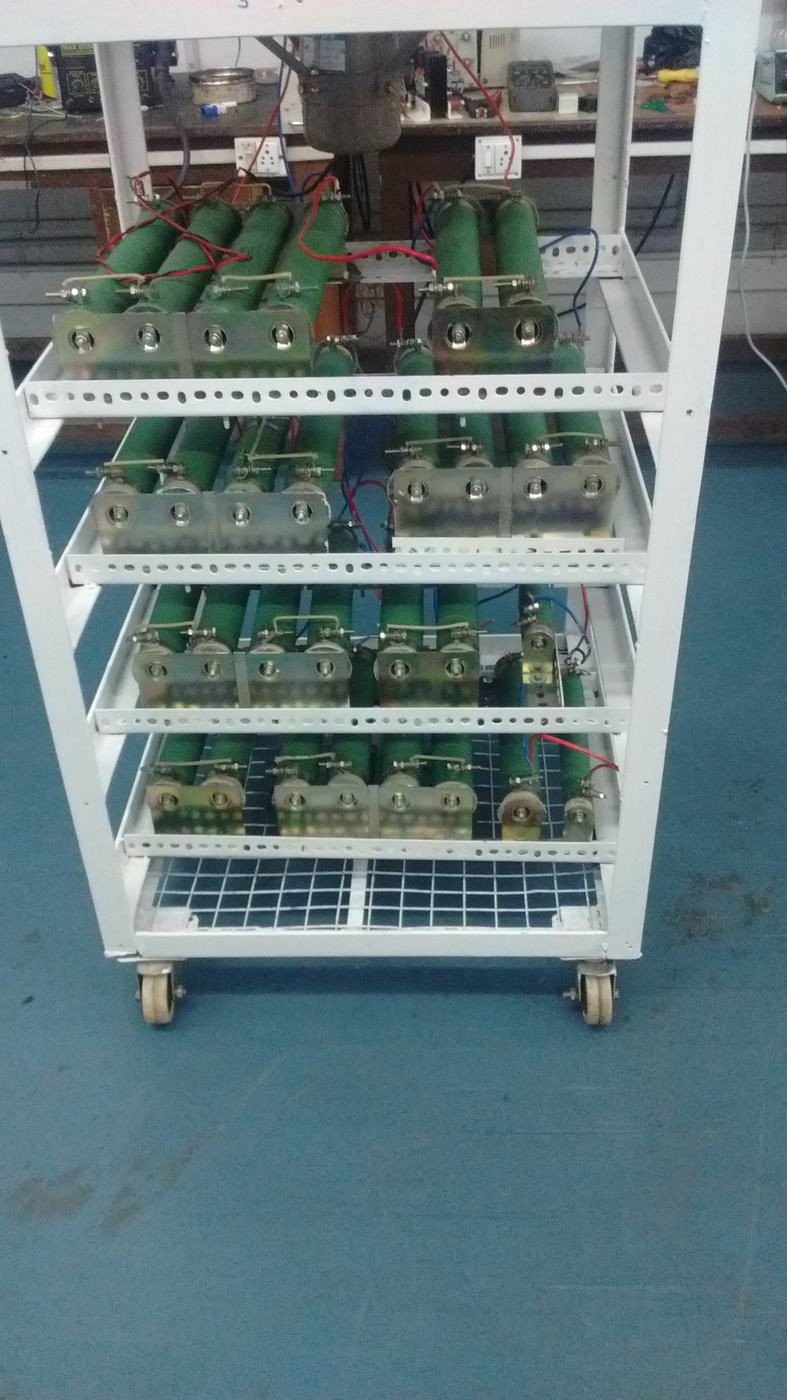
Prototypes run at full load on our lamp and resistive load banks and a 15 kVA three-phase test bed with isolated Fluke instrumentation, with protection and fault responses triggered on purpose. You receive the results with the design.

Send us your specification.

Include the ratings, the standard it has to meet and your expected volumes. An engineer reads every enquiry.

info@algonics.com

Kolkata

Module 318, 2nd Floor, S.D.F. Building
Block GP, Sector V, Salt Lake
Kolkata 700091, India

Office +91 33 4004 2846
Mobile +91 94778 08318

New Jersey

14 Eastwood Blvd
Manalapan, NJ 07726
United States

+1 646 493 5057